
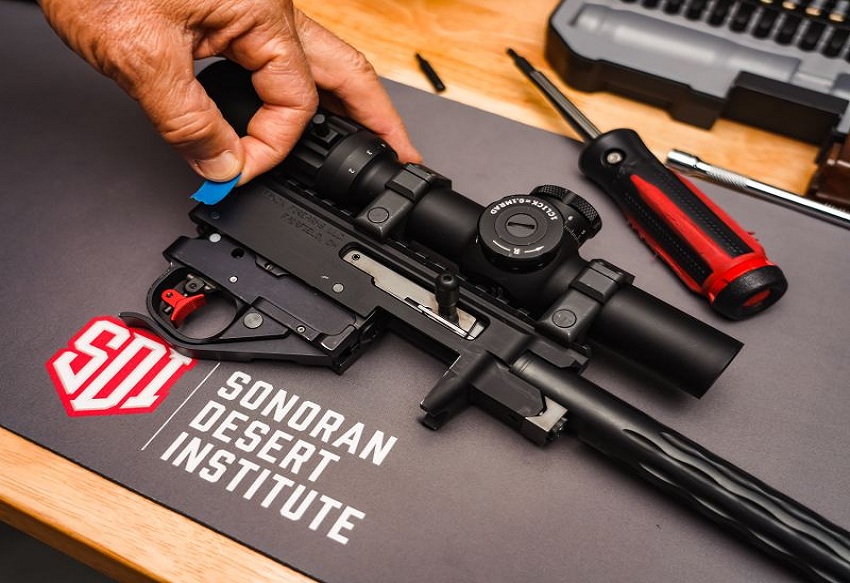
Selecting a technical training program often prompts prospective students to evaluate how well a school fits their goals and expectations. Prospective students often search for phrases like Sonoran Desert Institute Cost and Sonoran Desert Institute Worth It because they want a clear picture of what they receive for their effort and tuition. That is a reasonable way to frame any decision about education. Sonoran Desert Institute (SDI), which is accredited by the Distance Education Accrediting Commission (DEAC), focuses on firearms and uncrewed technology education and is often referenced when prospective students evaluate how technical programs teach mechanical fundamentals alongside practical skills. Understanding the role of foundational mechanical knowledge helps explain why many firearms technology programs begin with core system principles before introducing more advanced procedures.
Firearms technology careers involve careful interaction with complex mechanical systems. Technicians must understand how components operate together, how forces move through the system, and how small changes can affect overall performance. Foundational mechanical knowledge provides the framework that allows students to approach these systems with clarity and precision.
Understanding Firearms as Mechanical Systems
At the core of firearms technology training is the recognition that firearms function as mechanical systems composed of interconnected parts. Springs, pins, locking components, and trigger mechanisms all operate in a specific sequence that allows the firearm to function properly. Understanding this sequence is essential for anyone working with firearm platforms in a technical capacity.
Read More: How to Make Lessons More Engaging Without Redesigning Everything
Training programs often begin by teaching how these systems operate under normal conditions. Students learn how mechanical energy moves through the firearm during operation and how components interact during each stage of the firing cycle. This knowledge helps learners see the firearm not as a collection of individual parts but as a coordinated mechanical structure.
Supporting Safe Handling Through Mechanical Knowledge
Safe handling practices remain central to firearms technology education. Mechanical knowledge plays an important role in reinforcing these safety habits because it helps students understand why specific procedures exist. When students learn how safety mechanisms operate within a firearm system, they gain insight into how these features help control mechanical movement. Understanding how safeties interact with internal components reinforces the importance of following correct handling procedures.
Mechanical knowledge also helps students recognize the role of inspection before any technical task begins. Evaluating the condition of a firearm and verifying its status are essential steps that rely on understanding how the system functions. Students who understand these mechanics approach safety checks with greater awareness.
Mechanical Knowledge and Maintenance Procedures
Maintenance tasks require a clear understanding of how firearm components interact. Cleaning, inspection, and routine upkeep involve examining parts that influence the reliability and performance of the system. Without mechanical knowledge, these procedures may become routine actions without a deeper understanding.
Mechanical knowledge also supports careful tool use during maintenance. Students learn which components require delicate handling and which surfaces must remain free from damage. This awareness helps preserve the integrity of the firearm while performing routine tasks. Over time, these experiences help students approach maintenance work methodically. Instead of following instructions mechanically, learners understand how each step contributes to system reliability.
Building the Skills Needed for Modification Work
Modification work often represents a more advanced stage of firearms technology training. Adjusting or modifying components requires careful analysis of how changes may influence the mechanical system. Without a strong foundation in system operation, modification tasks could introduce unintended consequences. Students who understand mechanical principles are better prepared to evaluate the impact of adjustments. They recognize how component alignment, tension, and interaction influence the overall function of the firearm. This awareness helps guide careful decision-making when performing technical procedures.
Training programs typically introduce modification concepts after students develop familiarity with system mechanics. This sequence allows learners to approach advanced tasks with a clear understanding of how the firearm operates. Mechanical knowledge serves as the reference point for evaluating the results of adjustments. Through structured coursework, students also learn to document modification procedures and record observations about system behavior. This documentation reinforces analytical thinking and supports careful evaluation of mechanical outcomes.
Recognizing Patterns in Mechanical Operation
Foundational mechanical knowledge also helps students recognize patterns within firearm systems. Repeated interaction with components allows learners to observe how mechanical sequences occur during operation and how parts interact during assembly or disassembly. Recognizing these patterns supports diagnostic thinking. When students understand what normal operation looks like, they can more easily identify irregularities during inspection tasks.
Pattern recognition also strengthens procedural memory. Students who understand the sequence of mechanical movement can perform inspection or maintenance tasks more efficiently while maintaining attention to safety. Training programs often reinforce this understanding by introducing repeated assignments that involve observing mechanical systems. Through repetition, students build familiarity with how parts interact and how systems behave during normal operation.
Developing Analytical Thinking in Technical Work
Mechanical foundations also support analytical thinking, which is an important part of technical careers. Evaluating firearm systems requires careful reasoning about how components interact and how mechanical changes may influence performance. Students develop this reasoning through structured learning activities that combine theory and observation. Classroom instruction introduces mechanical concepts, while practical assignments allow learners to examine those concepts in real equipment.
This combination encourages students to approach technical questions with patience and methodical thinking. Instead of relying on guesswork, they learn to analyze mechanical systems step by step and consider how each component contributes to the overall function. Analytical thinking also improves communication within technical environments.
Connecting Mechanical Foundations to Technical Careers
Firearms technology careers require a balance between mechanical knowledge and practical skill. Technicians must understand how systems operate, how to maintain equipment responsibly, and how to approach technical procedures with care. Foundational mechanical education provides the basis for these responsibilities. Training programs that emphasize mechanical fundamentals help students build the knowledge necessary to perform technical tasks thoughtfully. This knowledge supports safe handling practices, careful maintenance, and informed decision-making during advanced procedures.
People who search the phrase Sonoran Desert Institute worth it are often asking whether training programs develop skills that remain useful beyond the classroom. Mechanical foundations contribute to that outcome by helping students understand how firearm systems function and how to approach technical work with confidence and precision. Technical education benefits from a clear progression that begins with mechanical understanding and moves into applied practice. When students develop strong foundational knowledge, they gain the perspective needed to perform safe handling, maintenance, and modification work responsibly throughout their technical careers.