
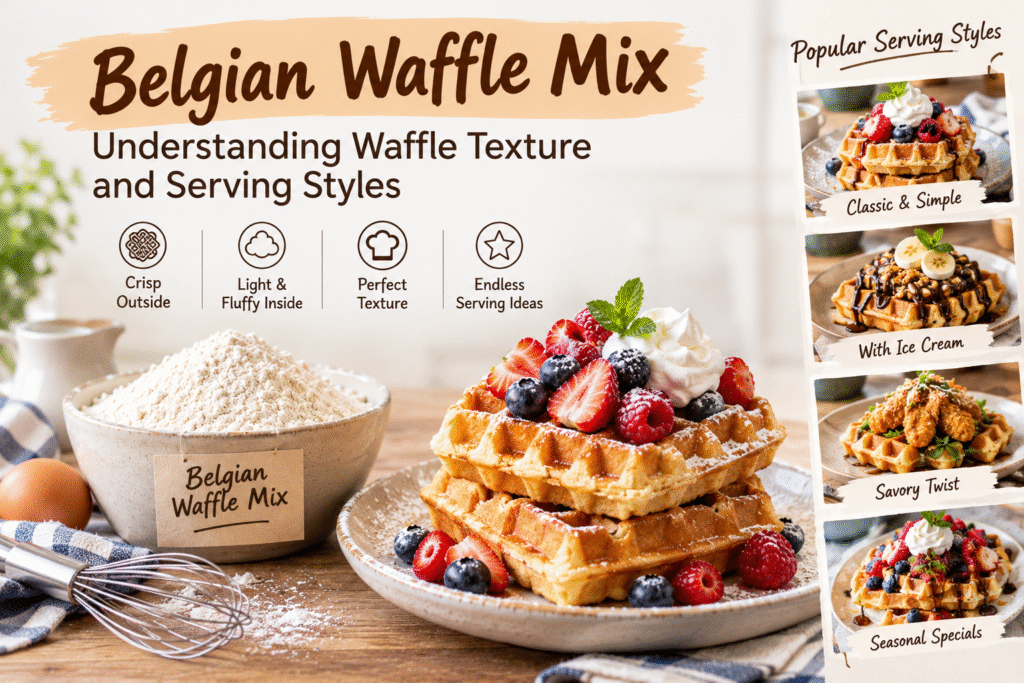
Waffles have turned into a great variety of products that fit into the menu of any café, hotel, restaurant, or foodservice network. They are good enough to be included in the breakfast menu, combined with ice cream as a dessert, or be transformed into a light savory dish with various toppings. However, not only the additional ingredients influence the final quality and image of the dish – the structure of the waffle, its thickness, color, shape, and many other characteristics are also significant factors.
Therefore, for a professional chef or food service operator, it is important to know the specific features of each type of waffles, their benefits, and disadvantages. The choice of the appropriate batter recipe and further preparation technology depends on the selected tools (primarily waffle irons), and the quality of the finished product also depends on the interaction with the environment and the time between baking and serving. A Belgian waffle mix, for example, can be used to create a great variety of dishes, but the preparation of each requires different technologies and skills.
What Defines the Texture of a Belgian Waffle?
Belgian-style waffles are often associated with a large size, crispy texture on the outside and a fluffy center. The pockets can be filled with various toppings like fruits, whipping cream, chocolate sauce, or others. The degree of fluffiness is determined by the recipe, the quality of the batter, and the cooking process.
For a restaurant, the ratio of crispy and fluffy parts is of particular importance. It should not be too fluffy as it will make the waffle difficult to eat with a fork. On the other hand, it should not be overdone to avoid a dry center. It is necessary to choose the right consistency for a specific dish, not following the standard rules and proportions.
A professional-grade Belgian waffle mix can help simplify batter preparation by providing a pre-formulated base. Staff can follow the specified ingredient quantities and mixing instructions, then adjust cooking practices to suit the equipment and service requirements. Accurate measurement is still important, as changes in liquid quantity or mixing can affect batter consistency and the finished waffle.
How Preparation and Cooking Affect Waffle Texture
The waffle iron has a direct influence on the finished product. Its temperature, plate design, and cooking duration affect browning, moisture loss, and the development of the outer surface. If the iron is not sufficiently heated, the waffle may cook unevenly or develop less colour than intended. Excessive cooking, on the other hand, can leave the interior dry.
Batter consistency also deserves attention. A mixture that is too thin may spread differently across the plates, while an overly thick batter may not distribute evenly into the deeper sections of the iron. Following the recommended preparation method helps staff establish a repeatable starting point.
Read More: Order Types, Stop-Losses and Market Depth Explained Simply
In busy kitchens, consistency becomes particularly important when several team members share production duties. Clear instructions for batter preparation, portioning, cooking time, and equipment settings reduce differences between batches. Staff should also avoid opening the waffle iron too early, as the waffle may not yet have developed sufficient structure.
Belgian Waffle Mix and Crispy Waffle Mix: Understanding the Difference
Different waffle applications call for different textural characteristics. A Belgian-style waffle is often served with a soft centre and a browned exterior, whereas some menu items are better suited to a thinner or more distinctly crisp finish. The choice depends on customer expectations, toppings, and how long the waffle needs to retain its texture before consumption.
A crispy waffle mix may suit menu applications where a more pronounced crisp texture is preferred. This distinction is useful when planning a menu that includes different waffle styles rather than expecting one formulation to produce identical results across every application.
The preparation process still influences the final outcome. Cooking time, batter quantity, waffle iron temperature, and the conditions after cooking can all affect crispness. A waffle placed immediately in a closed container, for example, may lose some of its crisp exterior as trapped steam softens the surface.
Professional kitchens should therefore assess the complete serving process, not just the batter. A waffle intended for immediate plating may need a different workflow from one prepared in batches for a buffet.
Choosing Serving Styles for Different Food service Settings
Waffles can be adapted to suit different menus without changing their basic preparation method. In cafés, a Belgian-style waffle may be served with fresh fruit, sauces, or whipped cream. Its deeper pockets help accommodate toppings, while its substantial shape makes it suitable for a plated dessert or a more filling breakfast option.
Hotels may include waffles in breakfast service, where preparation speed and consistency matter. A station preparing waffles to order can focus on immediate serving, while a buffet operation must consider how the texture changes as waffles stand. Cooking in manageable batches and avoiding tightly covered holding containers can help reduce moisture accumulation.
For dessert menus, waffles can be paired with ice cream, chocolate-based toppings, or fruit preparations. Savoury versions can also be considered, depending on the batter formulation and the intended flavour profile. In each case, toppings should complement the waffle without making it difficult to eat or causing the surface to soften too quickly.
Maintaining Waffle Quality During Service
Freshly cooked waffles generally offer the clearest contrast between a browned exterior and a softer centre. Once removed from the iron, steam begins to escape, and the surrounding conditions influence how the texture develops. Stacking hot waffles directly on top of one another can trap moisture, while covering them tightly can soften the surface.
Where advance preparation is necessary, kitchen teams should test suitable holding arrangements and establish how long waffles can be held while meeting their quality standards. A wire rack may allow steam to escape more effectively than a flat, enclosed surface. However, holding time and temperature should be determined according to the kitchen’s equipment, food-safety requirements, and service needs.
Read More: Alkaline RO Water Purifiers: Is the pH Boost Worth It?
Portion control also helps maintain consistency. Using a repeatable quantity of batter for each waffle makes it easier to manage cooking time and achieve similar sizes. Staff should monitor browning and doneness rather than relying on time alone, particularly when equipment or production volumes change.
Bringing Texture and Presentation Together
Selecting a waffle formulation is only one part of developing a reliable menu item. The waffle’s texture must suit its toppings, serving temperature, and intended use. A Belgian-style waffle may work well for plated desserts and breakfast dishes, while a crispier style may be more appropriate for applications where a firmer exterior is preferred.
For professional kitchens, testing the formulation under actual service conditions provides useful guidance. Evaluating the waffle immediately after cooking and after a short holding period helps teams understand how preparation and presentation affect the result. With a suitable batter, controlled cooking, and a well-planned serving process, waffle quality can be managed more consistently across different food service applications.