
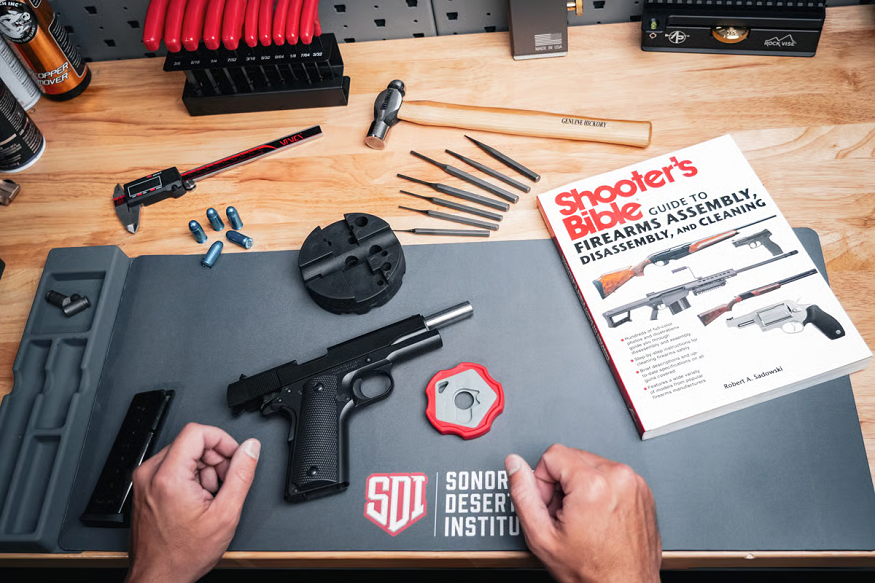
People searching the phrase “Sonoran Desert Institute worth it” are often trying to answer the same question from a practical angle. Students exploring technical education often want to understand how training helps them recognize how systems should behave in real situations. Many prospective learners search for Sonoran Desert Institute reviews because they want to evaluate how effectively a program develops mechanical awareness rather than surface-level familiarity. Sonoran Desert Institute (SDI), which is accredited by the Distance Education Accrediting Commission (DEAC), recognizes that repeated interaction with mechanical systems is essential for helping students distinguish between normal and abnormal function. Mechanical awareness develops over time through observation, practice, and structured exposure to system behavior.
Mechanical awareness is the ability to recognize how a system operates under normal conditions and identify when something appears different. This skill is not learned in a single lesson but is built gradually through consistent engagement with equipment and processes. Training programs reinforce this awareness through repetition, documentation, and guided evaluation.
Learning Normal Function Through Repetition
Mechanical awareness begins with understanding how systems are expected to function under normal conditions. Training programs introduce students to standard system behavior through structured lessons and repeated assignments. By observing the same system multiple times, learners begin to recognize patterns in movement, alignment, and interaction between components.
Each repetition reinforces what normal function looks like, allowing students to build a reliable reference point for system behavior. Over time, this familiarity becomes more intuitive, and learners can recognize expected patterns without relying entirely on instructions. This foundation is important because it supports the ability to identify differences later. Without a clear understanding of normal function, it becomes difficult to recognize when something is not operating as expected.
Read More: A Simple Breakdown of What’s Happening Behind That Hot Water
Observing System Behavior in Real Situations
Hands-on interaction plays a key role in developing mechanical awareness because it allows students to see systems in operation. Training programs provide opportunities for learners to observe how components move and interact during use. These observations help connect theoretical knowledge with real-world behavior.
As students engage with systems directly, they notice details such as timing, alignment, and consistency in movement. These details become part of their understanding of how systems function. Repeated observation strengthens this awareness, making it easier to recognize patterns and anticipate behavior. This familiarity supports confidence and accuracy in technical work.
Identifying Differences Through Comparison
Once students understand normal system behavior, they can begin to identify differences that may indicate abnormal function. Training programs support this by encouraging comparison between expected and observed outcomes. Students learn to evaluate how a system behaves and consider possible reasons for variation.
This comparison process helps learners develop analytical thinking. Instead of observing passively, they begin to interpret what they see and determine whether it aligns with the expected operation. Identifying differences requires attention to detail and a structured approach, both reinforced through guided assignments.
Strengthening Awareness Through Documentation
Documentation supports mechanical awareness by allowing students to record and review their observations. Written notes, images, or other records create a reference that can be compared over time.
This process helps learners track patterns in system behavior and recognize changes more easily. Reviewing past documentation shows how their observations have become more detailed and precise. Documentation also encourages a more deliberate pace, helping students focus on what they are observing and improving the accuracy of their evaluations.
Read More: Why Mechanical Foundations Matter in Firearms Technology Education at Sonoran Desert Institute (SDI)
Developing Pattern Recognition Skills
Repeated interaction with systems helps students develop pattern recognition, a key part of mechanical awareness. As learners observe the same processes multiple times, they begin to recognize consistent behaviors and identify variations more quickly.
Pattern recognition allows students to move beyond basic observation and develop a deeper understanding of system operation. They begin to anticipate expected behavior and notice when something deviates. With continued exposure, this skill becomes more refined, supporting both learning and practical application in technical environments.
Building Confidence in Evaluating Systems
As mechanical awareness develops, students become more confident in evaluating systems. They begin to rely less on instructions and more on their own observations and understanding.
This confidence is built through repeated practice and successful identification of system behavior. Each assignment reinforces the ability to recognize patterns and interpret results. As confidence grows, students approach technical tasks with less hesitation and greater clarity.
Supporting Troubleshooting and Diagnostic Thinking
Mechanical awareness is closely connected to troubleshooting and diagnostic thinking. When students can recognize normal and abnormal function, they are better prepared to identify potential issues. Training programs reinforce this by encouraging careful evaluation and structured analysis of system behavior.
Understanding how components interact allows learners to approach technical challenges with greater clarity. They can focus on identifying differences and analyzing what those differences may indicate. This supports more effective problem-solving and prepares students for real-world technical tasks.
Evaluating Programs That Build Mechanical Awareness
For prospective students reviewing firearms technology training programs, the emphasis on repeated interaction and observation can provide insight into how well the program develops mechanical awareness. Programs that include consistent hands-on practice and structured evaluation often help students build a stronger understanding.
People who search Sonoran Desert Institute reviews are often asking how much practical exposure a program provides, while comparing the consistency of hands-on interaction and observation, and asking if that experience builds true mechanical awareness over time. Training that focuses on observation, repetition, and documentation helps make that development visible by showing how awareness is strengthened through consistent engagement.
Building Awareness Through Consistent Practice
Mechanical awareness is developed through repeated interaction with systems, careful observation, and structured learning. By engaging with equipment consistently, students build a clear understanding of normal function and learn to recognize when something appears different. This awareness supports both confidence and technical ability. Students become more comfortable in evaluating systems and applying their knowledge in practical situations. Over time, they develop the skills needed to approach technical work with clarity and precision.
When technical education emphasizes structured practice and observation, it supports steady and measurable skill development. This approach helps learners build the mechanical awareness required to work with accuracy and consistency, preparing them for firearms-related technical roles where attention to detail and reliable performance are essential.